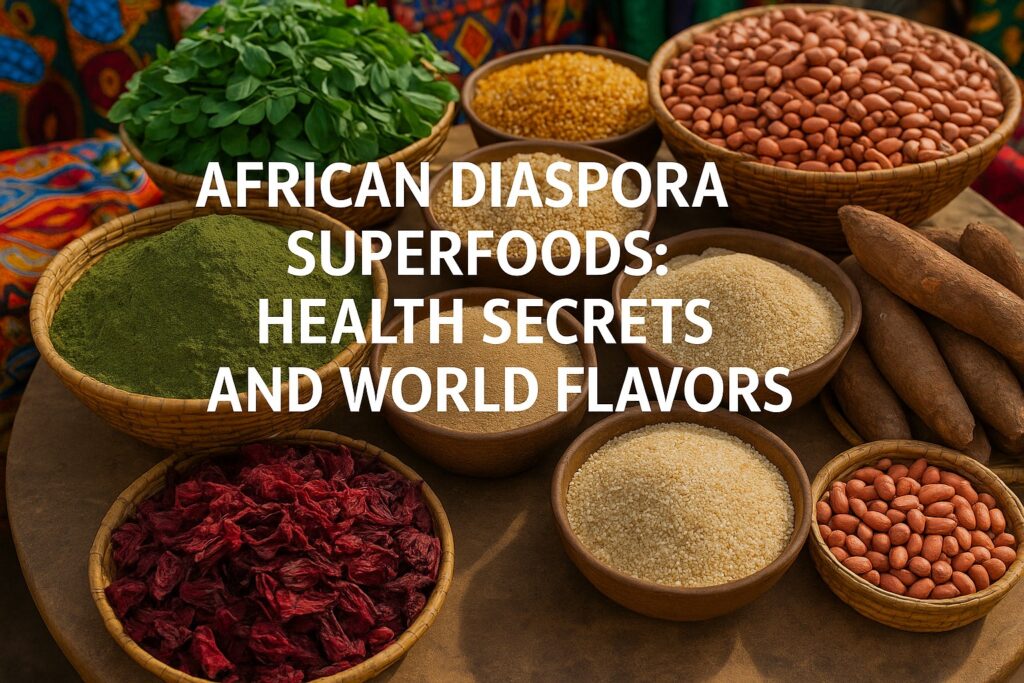
Introduction
In recent years, the word “superfood” has become a buzzword in nutrition and wellness circles. It refers to foods that are naturally rich in vitamins, minerals, antioxidants, and other compounds that boost our health. But while the Western world often highlights chia seeds, quinoa, or goji berries, the African diaspora has, for centuries, cultivated and consumed its own treasure trove of nutrient-packed foods.
From Lagos to Dakar, Kinshasa to Port-au-Prince, and across communities in North America, the African diaspora has carried with it not only traditions, stories, and music, but also its cultural identity through food. These superfoods are more than just healthy ingredients; they are symbols of resilience, connection, and heritage.
In this article, we will explore the superfoods of the African diaspora: their nutritional value, their cultural meaning, and their growing role in global wellness trends.
1. What makes a food a “superfood”?
“Superfood” is not an official scientific category but rather a term used to describe foods that are dense in essential nutrients:
- Vitamins and minerals
- Protein or amino acids
- Antioxidants
- Healthy fats
- Fiber
For the African diaspora, these foods are not trends. They are staples of daily life, passed down through generations. Today, however, they are gaining recognition in global markets for their health benefits and unique flavors.
2. Moringa: The miracle tree
Origins and traditional use
Known as the “tree of life”, moringa is native to parts of Africa and Asia. The leaves, seeds, and even roots of the plant are used in traditional cooking and medicine.
Health benefits
- Strengthens the immune system.
- Helps combat anemia with its high iron content.
- Supports blood sugar regulation.
Modern adaptation
Moringa powder is now added to smoothies, energy bars, and baked goods, making it one of the fastest-rising stars in the health food world.
3. Hibiscus (Bissap): The red vitality drink
Origins and culture
Hibiscus, called bissap in West Africa, is a bright red drink made from dried hibiscus flowers. In many African and Caribbean households, it is the drink of celebrations.
Health benefits
- Rich in antioxidants.
- Helps regulate blood pressure.
- Supports healthy digestion.
Today
Hibiscus tea is becoming popular in Canada, the U.S., and Europe, appearing in cafés, restaurants, and even craft cocktail menus.
4. Fonio: The ancient gluten-free grain
Origins
Fonio is one of the oldest cultivated grains in West Africa, dating back over 5,000 years.
Health benefits
- Naturally gluten-free.
- Packed with protein and essential amino acids.
- Easy to digest and suitable for modern diets.
Modern adaptation
Chefs worldwide are experimenting with fonio as a substitute for quinoa or couscous, giving it new life in fine dining and health-conscious kitchens.
5. Cassava: A diaspora staple
A universal food
Cassava is a root vegetable central to African, Caribbean, and Latin American cuisine. It is transformed into gari, attiéké, tapioca, or flour.
Health benefits
- Provides quick energy.
- Gluten-free alternative to wheat.
- Highly versatile in cooking.
6. Peanuts: More than a snack
Origins
Though peanuts originated in South America, they became deeply rooted in African cuisine during the transatlantic trade era. Today, they are essential in African stews, snacks, and oils.
Health benefits
- High in plant-based protein.
- Rich in healthy fats.
- Provides magnesium and vitamin E.
7. African ginger
Flavor and healing power
African-grown ginger is spicier and more aromatic than many of its Asian counterparts.
Health benefits
- Natural anti-inflammatory.
- Improves digestion.
- Boosts circulation and immunity.
8. Okra: The forgotten vegetable
A unique food
Okra, also known as “lady’s finger,” is widely used in African and Caribbean stews. Its mucilage texture, sometimes misunderstood, actually offers nutritional value.
Health benefits
- Excellent source of fiber.
- Helps regulate blood sugar levels.
- Supports cholesterol management.
9. Superfoods as cultural heritage
For the African diaspora, eating these foods is not only about health. It is also about:
- Preserving connections to ancestral roots.
- Sharing cultural traditions with younger generations.
- Valuing heritage and identity in everyday life.
10. Maison Espérance: A bridge between worlds
At Maison Espérance, a global grocery store in Gatineau, these superfoods are more than items on a shelf. They are a celebration of culture and wellness. By offering moringa, hibiscus, fonio, cassava, and more, Maison Espérance helps the African diaspora in Canada stay connected while inviting new communities to explore these treasures.
Conclusion
The superfoods of the African diaspora are not fads. They are timeless, carrying centuries of knowledge, health wisdom, and culture. By integrating them into our diets, we nourish both our bodies and our identities. They remind us that food is more than fuel—it is history, memory, and connection.
✍️ Maison Espérance Publications
📍 89 Boulevard St. Raymond, Gatineau, QC
📞 +1 (819) 776-2242
📧 contact@maisonesperance.com
🌍 www.maisonesperance.com